How PrivateDocsAI Eliminates the Need for Third-Party Data Processing Agreements (DPAs)
PrivateDocsAI Team
In the legal and corporate world of 2026, the Data Processing Agreement (DPA) has become one of the most significant bottlenecks to digital transformation. Every time a law firm or an enterprise wants to adopt a new AI tool, they are forced into a grueling cycle of vendor risk assessments and legal red-lining. The goal is always the same: to ensure that when sensitive data is sent to a third party, it remains protected under GDPR, SOC2, or HIPAA.
But what if you didn't have to send the data at all?
By shifting from cloud-based models to offline enterprise AI, organizations can fundamentally change their compliance posture. PrivateDocsAI is designed to bring the intelligence to your data, effectively eliminating the legal requirement for a third-party DPA. This shift isn't just about security; it's about reclaiming the speed of business.
For firms looking for a ChatGPT enterprise alternative for law firms, the transition to a local-first model represents the ultimate compliance shortcut.
The DPA Trap: Why Cloud AI is a Legal Bottleneck
A Data Processing Agreement is a legally binding document required by privacy laws (like GDPR Article 28) when a "Data Controller" (your firm) uses a "Data Processor" (a cloud AI vendor). The DPA governs how that third party handles, stores, and protects your data.
When you use a cloud-based secure document AI, the DPA becomes your only shield against liability. However, this shield has several cracks:
- Sub-processor Risks: Your AI vendor often uses other cloud providers to host their infrastructure, creating a "chain of trust" that is difficult to audit.
- Jurisdictional Conflicts: If a cloud provider moves data across borders, you may be in violation of local data residency laws regardless of the DPA.
- Audit Complexity: Verifying that a cloud vendor is actually adhering to the DPA is nearly impossible for most mid-sized firms.
By using PrivateDocsAI, you aren't using a "Data Processor" in the traditional sense. You are using a local tool—much like a calculator or a local text editor—that processes data entirely within your own infrastructure.
Pillar 1: Reclaiming Data Sovereignty with Local RAG
The primary reason cloud AI requires a DPA is the transfer of data. To perform instant document chat, cloud tools must ingest your files into their remote databases.
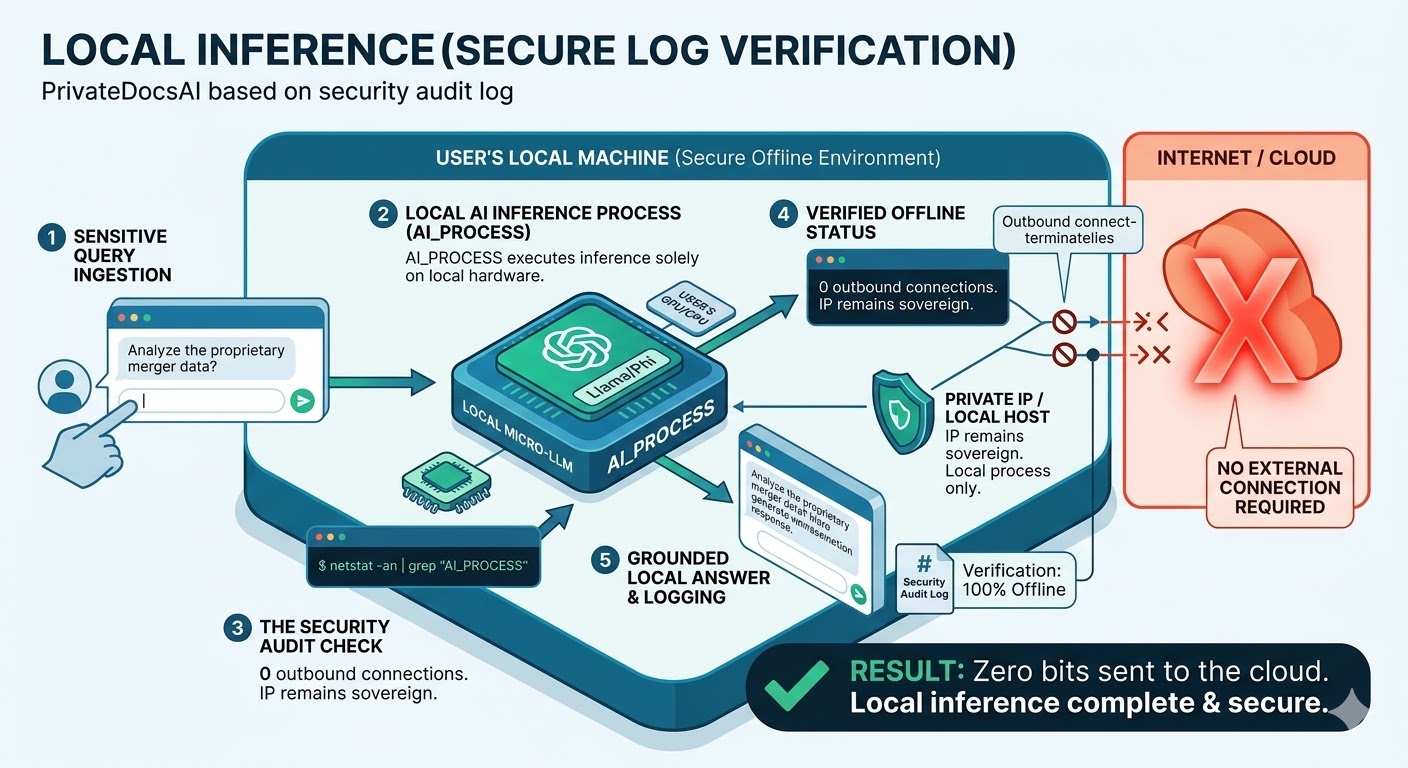
PrivateDocsAI uses a Private RAG architecture. This means the "Retrieval" and the "Generation" happen in a closed loop on your hardware.
The Local Technical Stack
Because PrivateDocsAI is a downloadable desktop application, the entire technical stack is host-managed:
- Local Embedding: The
bge-m3model converts your text into vectors on your own CPU/GPU. - Local Vector Database:
ChromaDBstores these vectors on your local SSD, not in a third-party cloud. - Local Inference: Micro-LLMs like Llama, Qwen, or Phi process the query offline.
Since no data is "processed" by PrivateDocsAI as a service provider, there is no transfer of control, and therefore, no legal requirement for a DPA. You remain both the Controller and the Processor.
Pillar 2: Eliminating Shadow AI and Compliance "Drift"
One of the greatest fears for a CISO or IT Director is "Compliance Drift"—the gap between your official security policy and what employees actually do. When a lawyer or financial analyst needs to summarize a 400-page PDF and your internal tools are too slow, they turn to public AI.
This "Shadow AI" use is a direct violation of almost every privacy regulation because it happens without a DPA in place.
PrivateDocsAI provides a ChatGPT enterprise alternative that is more attractive to employees because it is faster and more reliable. With features like Smart Table Parsing (Advanced local OCR), users can handle complex enterprise documents—like invoices and multi-page tables—entirely offline. When the secure tool is the most efficient tool, Shadow AI disappears.
Pillar 3: Strict Grounding and the End of External Hallucinations
Beyond data transfer, DPAs often struggle to address the "accuracy" of AI. In a cloud environment, an AI might pull information from its training data that is irrelevant or even harmful to a legal case.
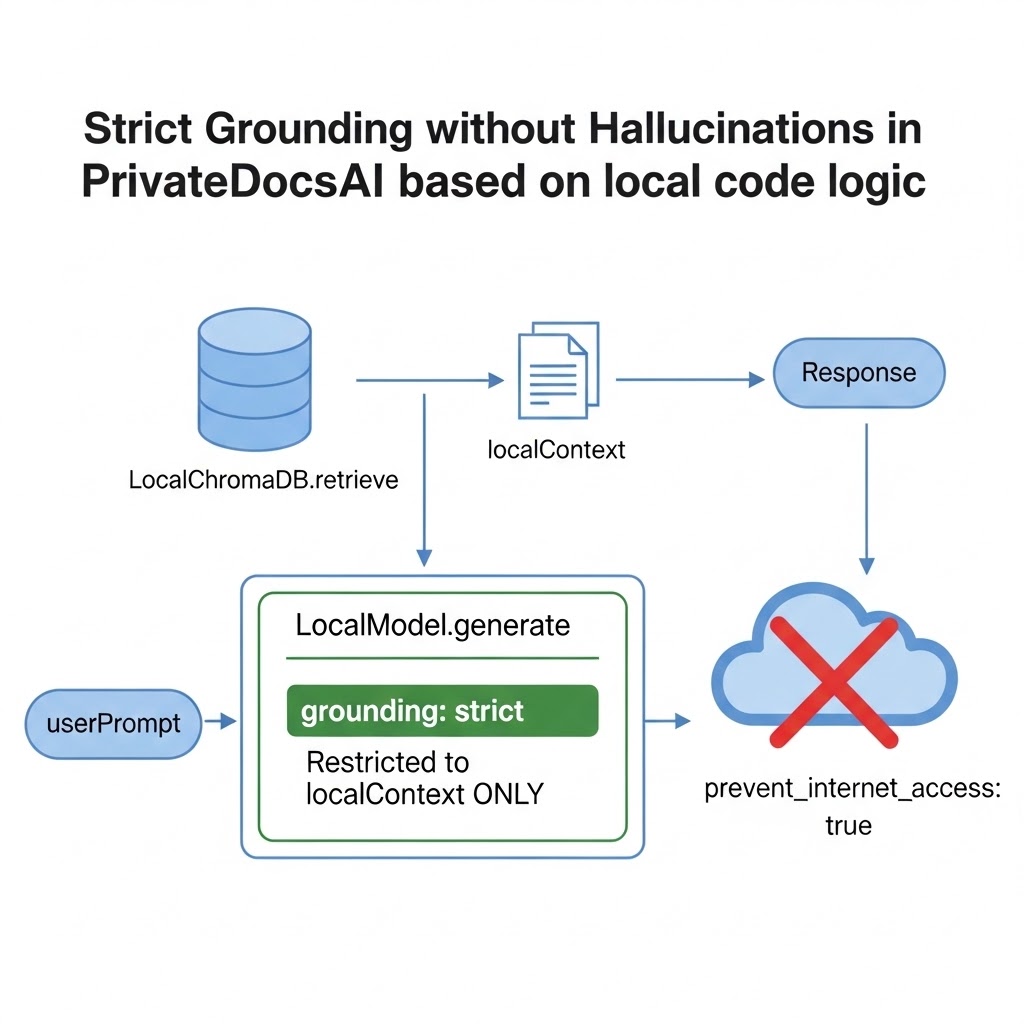
PrivateDocsAI implements Strict Grounding. The local LLM is hardcoded to answer only using the documents you have specifically ingested. This provides an audit trail that is entirely local and verifiable.
The ROI of Local AI Performance
For many firms, the cost of cloud AI isn't just the subscription—it's the legal and administrative overhead.
1. Zero API and Egress Costs
Cloud-based data privacy AI tools charge per token and often involve data egress fees. With PrivateDocsAI, your only cost is the B2B subscription. Your existing hardware (whether a standard business laptop or a high-end workstation) does the heavy lifting.
2. Immediate Deployment
Because you don't need to negotiate a DPA with a third party, you can deploy PrivateDocsAI as soon as your IT team approves the local binary. This can save months of legal back-and-forth.
3. Hardware Agnostic Scaling
PrivateDocsAI is hardware agnostic. It auto-scales its performance based on the user's machine. This means you don't need to purchase specialized AI servers to maintain a zero-trust architecture; you can leverage the hardware you already own.
Use Case: Private AI for Financial Analysts and HR
While lawyers are a primary focus, HR Executives and Financial Analysts face similar DPA hurdles.
- HR: Analyzing employee feedback or payroll data requires extreme privacy. Uploading this to a cloud AI, even with a DPA, is a high-risk activity.
- Finance: Quarterly reports and M&A documents are highly sensitive. A local secure document AI ensures these "market-moving" documents never hit the public web.
By bringing the AI to the data, these departments can use generative AI to find insights in seconds without ever putting the company’s regulatory standing at risk.
Conclusion: The Path to Zero-Trust Compliance
The future of AI in the enterprise is not "more cloud"; it is "more control." As regulators become more sophisticated, the "Trust us" model of cloud AI will continue to fail under the weight of DPA requirements and security audits.
A true Zero-Trust AI strategy starts with the assumption that the cloud is a risk. By adopting an offline enterprise AI like PrivateDocsAI, you are choosing a path that prioritizes data sovereignty, eliminates legal bottlenecks, and empowers your team with the most advanced Micro-LLMs available in 2026.
Stop waiting for legal to sign off on a third-party DPA. Take control of your data and your AI future today.
Next steps
Ready to test a truly private AI? Download the PrivateDocs AI desktop app today and start your free 7-day trial. Experience local RAG on your own hardware—no credit card required. Your documents and chat queries stay on your device; brief connections are used for sign-in, licensing, and billing.